
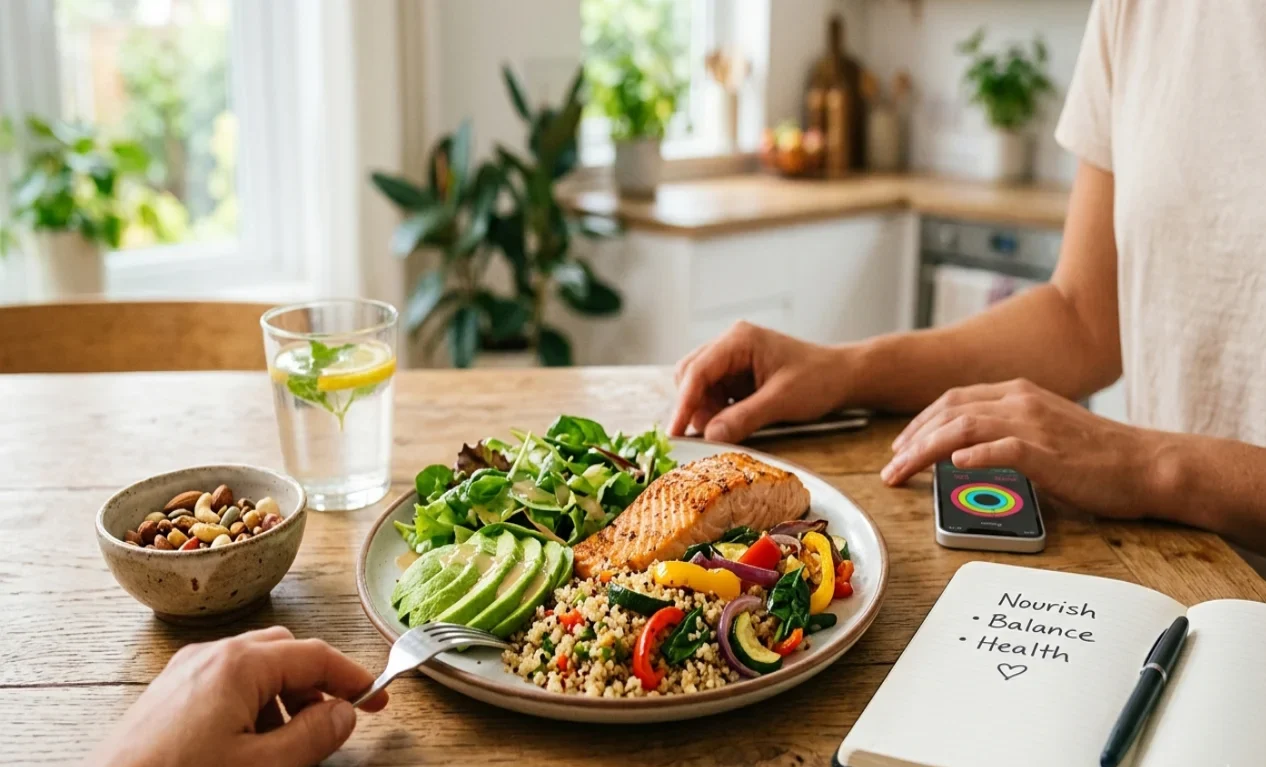
What are macros — and why do they matter more than calories alone?
The Beginner’s Complete Guide to Counting Macros for Fat Loss. You’ve probably heard someone at the gym say “I’m hitting my macros” like it’s a secret language. It’s not. Macros—short for macronutrients—are simply the three categories that make up every calorie you eat: protein, carbohydrates, and fat. That’s it.
Here’s why they matter for fat loss: Two people can eat exactly 1,800 calories a day and have wildly different results. One loses mostly fat and keeps their muscle. The other loses muscle, feels exhausted, and regains the weight. The difference? What those calories are made of.
Welcome to the perplexing world of nutrition, where fad diets often cloud practical advice. However, if your primary goal is sustainable fat loss, understanding and applying the principles in The Beginner’s Complete Guide to Counting Macros for Fat Loss (Without Obsessing Over Numbers) is a game-changer. This approach doesn’t just focus on how much you eat but on what you eat, giving you a customized formula for success.
Most people shy away from macro counting, fearing it will turn their relationship with food into a scientific data-entry job. The fear of becoming overly focused on meticulous tracking is valid, and this guide is specifically designed to address that. Think of this as your empowering entry into understanding your body’s fuel requirements. By the end of The Beginner’s Complete Guide to Counting Macros for Fat Loss (Without Obsessing Over Numbers), you will possess the clarity and tools to leverage this powerful technique as a stress-free, intuitive part of your healthy lifestyle. Let’s explore how you can unlock a healthier, leaner version of yourself with confidence and ease.
| 🥩 Protein 4 kcal per gram | 🍚 Carbohydrates 4 kcal per gram | 🥑 Fat 9 kcal per gram |
Think of calories as your budget and macros as how you spend it. You can blow your budget on junk or invest it wisely—same number, very different outcomes.
Your beginner macro targets for fat loss
There’s no universal perfect ratio, but this starting point works well for most beginners focused on fat loss while preserving muscle:
The 40 / 35 / 25 beginner split
40% protein · 35% carbohydrates · 25% fat. This prioritizes protein—the most important macro for fat loss—while keeping carbs available for energy and fat high enough for hormonal health.

To find your daily gram targets, multiply your target calorie intake by each percentage, then divide by the calories per gram (4 for protein and carbs, 9 for fat). At 1,800 calories: roughly 180g protein, 158g carbs, 50g fat.
Not a fan of math? Use a free macro calculator like Cronometer or MacroFactor—input your goal, and it does the arithmetic for you.
How to track without losing your mind
The biggest barrier for beginners isn’t understanding macros — it’s the fear that tracking will turn every meal into an anxiety spiral. Here’s how to keep it grounded:
The 80/20 tracking rule
Track 80% of your meals with intention. For the remaining 20%—a birthday dinner, a spontaneous brunch—eat mindfully and move on. Fat loss happens over weeks, not days. One untracked meal changes nothing.
Weigh, then learn to eyeball
Use a food scale for the first 2–3 weeks. Not forever — just long enough to calibrate your eye. After two weeks, most people can estimate a 150g chicken breast or a cup of rice accurately without weighing every time.
Prep your “anchor meals.”
Pick 3–4 high-protein meals you enjoy and rotate them. When 60% of your diet is predictable and pre-logged, the rest takes care of itself.
5 frequently asked questions
Do I have to hit my macros exactly every day?
No — and chasing perfection is counterproductive. Aim to land within 5–10 grams of each target most days. Your body responds to patterns over days and weeks, not single-day precision. Being 8g over on carbs is not a problem.
How is counting macros different from just counting calories?
Calorie counting tells you how much energy you’re consuming. Macro counting tells you what that energy is built from. You could hit 1,600 calories entirely from cookies — same calories, terrible macro split. Macros ensure your energy comes from sources that support fat loss, muscle retention, and satiety.
What’s the most important macro to get right for fat loss?
Protein, consistently. High protein intake preserves muscle while in a calorie deficit, increases satiety so you feel fuller longer, and has the highest thermic effect — meaning your body burns more calories digesting it. If you only focus on one macro, make it protein.
Can I count macros without a food scale?
Yes, especially after an initial calibration period. Hand-portion guides work reasonably well: a palm of protein, a cupped hand of carbs, a thumb of fat. They’re less precise but far better than not tracking at all. A food scale for the first few weeks builds the mental reference points you’ll use forever.
Will tracking macros lead to disordered eating?
For most people, no — in fact, having clear targets often reduces anxiety around food because it removes guesswork. That said, if you notice tracking increasing stress, guilt around food, or rigid all-or-nothing thinking, step back and speak with a registered dietitian. Tracking should feel like a tool, not a rule.
Amazon product recommendations
⚖️ Digital Kitchen Food Scale
A compact digital scale (like the Etekcity or OXO Good Grips models) removes all guesswork in the first weeks of tracking. Weighing food once calibrates your eye permanently — most dedicated macro trackers stop relying on a scale within a month, but that initial precision is what makes eyeballing accurate later.
Amazon Pick
🥤 Unflavored Whey or Plant Protein Powder
Protein is the hardest macro for most beginners to hit through whole foods alone. A clean, low-carb protein powder (such as Optimum Nutrition Gold Standard Whey or Orgain Organic Plant Protein) makes it easy to close a 20–30g protein gap without adding significant fat or carbs—essential for hitting targets while staying in a calorie deficit.
Amazon Pick


