
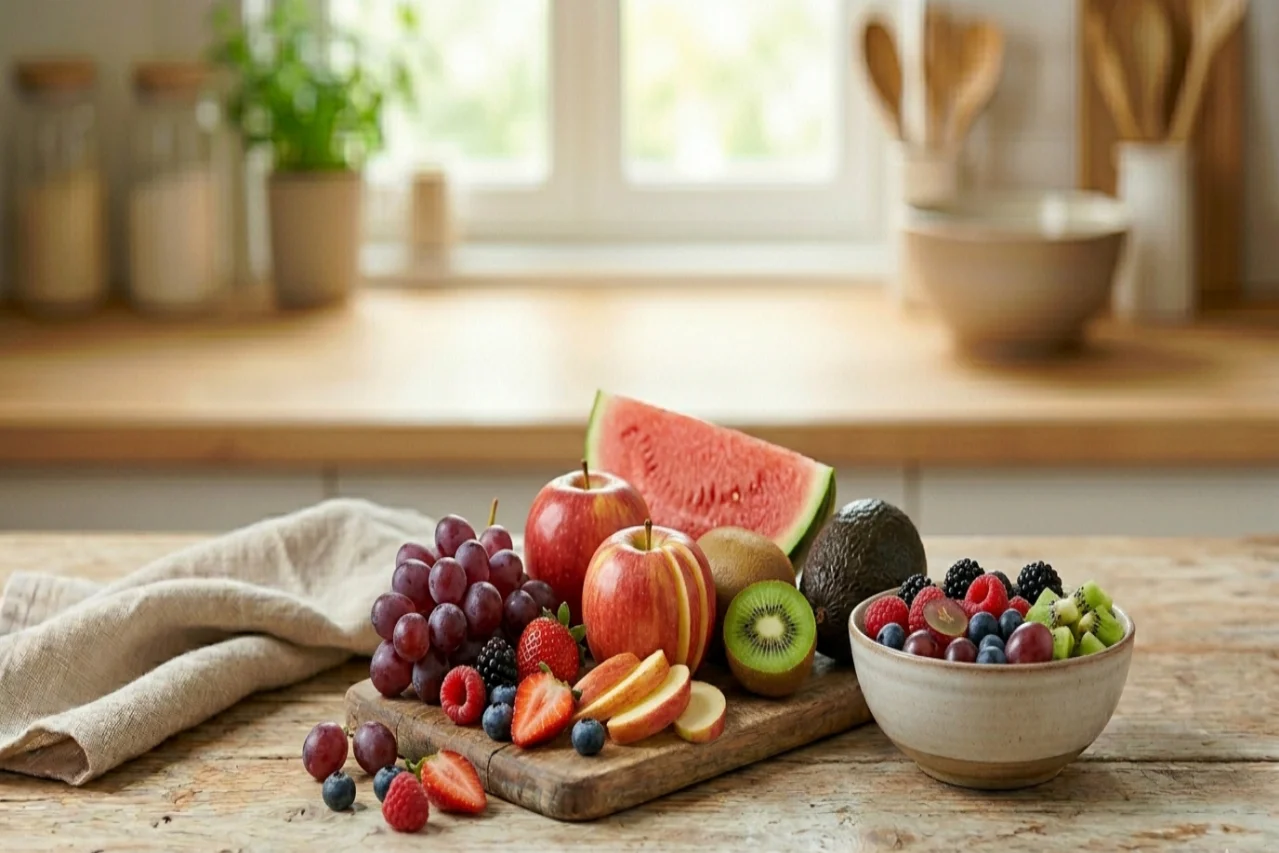
Fruit has been unfairly demonized in diet culture for years. “Too much sugar.” “Too many carbs.” “Bad for weight loss.” The science tells a completely different story. Certain fruits are not just acceptable on a fat-loss diet — they are actively powerful tools for burning fat, controlling appetite, and transforming your body composition. This guide reveals the 5 best fat-burning fruits, backed by research, and shows you exactly how to use them.
Fat-burning fruits for weight loss: the best fruits to eat to lose belly fat. High-fiber fruits for fat loss: fruits that boost metabolism naturally
You don’t have to choose between cravings and results. These science-backed fruits deliver natural sweetness, powerful satiety, and fat-burning nutrition — without derailing your calorie deficit.

Why Fruit Doesn’t Make You Fat — And Actually Helps You Lose It
The fear of fruit stems from a misunderstanding of how sugar works inside a whole food matrix. Yes, fruit contains fructose. But unlike the fructose in a can of soda, the fructose in whole fruit is packaged with fiber, water, vitamins, minerals, and polyphenols that dramatically slow its absorption, prevent blood sugar spikes, and trigger satiety hormones long before you overconsume calories.
The glycemic load of most whole fruits is remarkably low. You would need to eat approximately seven apples to replicate the blood sugar impact of one can of regular soda. No one eats seven apples in one sitting, because the fiber and water content make that physically impossible without feeling uncomfortably full.
The fruits below go a step further: they contain specific compounds — naringenin, anthocyanins, oleic acid, pectin, and citrulline — that actively support fat metabolism, reduce inflammation, and regulate the hormones that control hunger and fat storage.
Key principle: The enemy is not fruit sugar — it’s processed sugar in the absence of fiber. Whole fruit is categorically different from fruit juice, dried fruit, or any product with added fructose syrup.
The five fruits below were selected based on three criteria: caloric efficiency (maximum nutrition per calorie), satiety impact (how effectively they reduce hunger), and metabolic benefit (specific compounds that support fat loss). Each has been researched and studied extensively in the context of weight management.
Fruit 01
Grapefruit: 52 cal / half
Appetite suppression · Fat metabolism · Insulin regulation
Grapefruit has earned its reputation as one of the most researched fat-loss fruits in existence. A landmark 12-week clinical trial at the Scripps Clinic found that participants who ate half a grapefruit before each meal lost an average of 3.6 pounds — without any other dietary changes. Those who drank grapefruit juice lost less than those eating the whole fruit, underscoring the importance of fiber.
| 52 cal per half grapefruit | 88% water content | 2g fiber per half |

Why it burns fat
Grapefruit contains naringenin, a powerful flavonoid shown to improve insulin sensitivity, reduce fat accumulation in the liver, and activate fat-burning genes (specifically PPAR-alpha). Grapefruit also contains nootkatone — a compound that activates AMPK, essentially the body’s master metabolic switch that signals cells to burn fat for energy rather than store it.
How to use it
- Before meals — eat half a grapefruit 15–30 minutes before lunch or dinner to reduce total meal calories consumed
- Morning routine — replaces a high-sugar breakfast option while kickstarting digestion
- Grapefruit salad dressing — squeezed over greens with olive oil and sea salt
- Post-workout snack — the carbohydrates and vitamin C support muscle recovery
| Amazon pick: A citrus juicer or electric citrus press (like the Black+Decker Electric Citrus Juicer) makes daily grapefruit prep effortless. Also look for naringenin or grapefruit extract supplements for those who dislike the taste — these are widely available and evidence-backed. |
Important Note
Grapefruit and grapefruit juice interact with a number of common medications including statins, blood thinners, and certain blood pressure medications. If you are on any prescription medication, consult your doctor before adding grapefruit to your daily diet.
Best ways to eat it
Fruit 02
Mixed Berries: 32–57 cal / cup
Strawberries · Blueberries · Raspberries · Blackberries
If there is a single category of fruit that nutrition scientists universally celebrate for fat loss, it is berries. Blueberries, strawberries, raspberries, and blackberries are calorie-controlled, extraordinarily high in fiber, and packed with anthocyanins — the dark pigment compounds responsible for some of the most impressive fat-burning research published in the last decade.
| 50 cal per cup (raspberries) | 8g fiber per cup (raspberries) | 91% water content |

Why they burn fat
Berries are among the highest-fiber fruits available—raspberries deliver an extraordinary 8g of fiber per cup at just 32 calories. Anthocyanins in blueberries and blackberries have been shown in research to reduce abdominal fat accumulation, lower triglycerides, and improve glucose metabolism—effects observed even without changes to calorie intake.
Why berries are the undisputed #1 weight-loss fruit: Berries are the gold standard for anyone looking to satisfy sweet cravings without disrupting a calorie deficit. Raspberries and blackberries contain up to 8 grams of fiber per cup — nearly 30% of your daily recommended intake — creating a thick gel in your gut that slows digestion, blunts blood sugar spikes, and keeps you full for hours longer than a processed sweet snack ever could.
Their deep pigments (anthocyanins) aren’t just visually striking—they act as powerful anti-inflammatory antioxidants that directly support metabolic health, improve insulin sensitivity, and have been linked in multiple studies to reduced waist circumference and lower rates of visceral fat accumulation.
Best berry choices ranked for fat loss
- Raspberries — highest fiber, lowest calories; elite fat-loss choice
- Blackberries — highest anthocyanin content; excellent for belly fat reduction
- Strawberries — high vitamin C, anti-inflammatory; great daily staple
- Blueberries — most researched for metabolic benefits; slightly higher in sugar but still very low caloric density
| Amazon pick: Freeze-dried mixed berry powder (like Terrasoul Superfoods Freeze-Dried Berry ) Blend gives you the full anthocyanin and fiber profile year-round without worrying about freshness. Also consider a personal blender for daily berry smoothies. |
Research Spotlight
A study published in the Journal of Nutrition found that participants who consumed blueberries daily for 6 weeks showed significant reductions in abdominal fat, triglycerides, and fasting glucose levels compared to a control group — without changing anything else in their diet.
Best ways to eat them
Fruit 03
Watermelon: 30 cal / 100g
Volume eating · Hydration · Natural sugar craving control
Watermelon’s reputation as a “sugar bomb” is one of nutrition’s most persistent myths. At just 30 calories per 100g and 92% water content, it is one of the most volume-rich, calorie-sparse foods in existence. A generous two-cup serving contains just 80 calories and leaves you feeling significantly full.
| 46 Cal / cup | 92% Water content | 250mg citrulline per 100g |

Why it burns fat
Watermelon is the richest dietary source of citrulline — an amino acid shown to improve blood flow, enhance exercise performance, and reduce fat accumulation by inhibiting TNAP, an enzyme that promotes fat storage. Its lycopene content also provides powerful antioxidant and anti-inflammatory support for sustained fat loss.
The ultimate volume-eating fruit for dieters: Watermelon is the sweet treat that delivers the impossible combination every dieter craves — generous portions, true physical fullness, and genuinely indulgent sweetness, all at just 46 calories per cup. Because your stomach registers fullness based on volume and stretch, not calories alone, eating a large bowl of watermelon sends powerful satiety signals to your brain that a tiny piece of chocolate simply cannot match.
Beyond volume, watermelon contains L-citrulline, a rare amino acid that the body converts to arginine, improving blood flow, reducing muscle soreness after exercise, and supporting recovery — making it one of the best post-workout snacks for active people in a calorie deficit. Its lycopene content is also one of the highest of any whole food, with potent anti-inflammatory effects on fat tissue.
How to use it
- Post-workout recovery — citrulline reduces muscle soreness; natural sugars replenish glycogen
- Dessert substitute — chilled watermelon satisfies sweet cravings at a fraction of the calories
- Watermelon agua fresca — blended with lime and mint for a refreshing zero-guilt drink
- Watermelon salad — with feta, cucumber, and fresh basil for a filling side dish
| Amazon pick: L-Citrulline powder supplement (BulkSupplements Pure L-Citrulline Powder) lets you get the performance and fat-loss benefits of watermelon’s key compound in concentrated form—particularly useful as a pre-workout. Also try a watermelon slicer tool for effortless prep. |
Best ways to eat it
Fruit 04
Apple: 95 cal / medium
Pectin fiber · Satiety hormone support · Gut health
Apples are one of the most effective hunger-suppressing fruits available due to an exceptionally high pectin content that forms a gel in your stomach, slowing digestion and extending fullness. A medium apple eaten whole delivers roughly four hours of appetite control for just 95 calories.
| 95 Cal / medium | 4.4g Fiber | 86% water content |

Why it burns fat
Apples contain ursolic acid in their skin — a compound shown in University of Iowa research to increase brown fat tissue and muscle mass simultaneously. Brown fat is metabolically active tissue that burns white fat for heat, making ursolic acid a genuinely exciting finding for body composition. Always eat the skin: it contains the majority of the fiber, ursolic acid, and quercetin.
“An apple a day” is solid weight-loss science: Apples contain a unique form of soluble fiber called pectin that forms a viscous gel inside your digestive tract, physically slowing the absorption of sugar and fat from your meal, stimulating the release of the satiety hormone GLP-1, and dramatically extending the time before you feel hungry again.
The mechanical act of eating an apple also contributes to satiety in a way that most foods don’t — it requires substantial chewing, takes several minutes to consume, and triggers oral sensory satiation. Research shows that people who eat a whole apple before a meal consume an average of 200 fewer calories at that meal, making it one of the most effective pre-meal appetite suppressants in the natural food kingdom.
Granny Smith apples are the best choice for weight loss — they have the lowest natural sugar content of all apple varieties and the highest proportion of non-digestible fiber that feeds beneficial gut bacteria linked to reduced fat storage.
| Amazon pick: Organic apple cider vinegar with the “mother” (Bragg Organic ACV) concentrates many of apple’s active compounds and has its own body of fat-loss research. Also consider an apple corer and slicer for quick daily prep. |
Best ways to eat it
Fruit 05
kiwi 42 cal / kiwi
Vitamin C powerhouse · Digestive enzyme · Sleep & metabolism
| 42 Cal / kiwi | 2.1g Fiber | 230% Vitamin C DV | Actinidin Digestive enzyme |

The most underrated weight-loss fruit you’re probably not eating: Kiwi packs a staggering amount of nutrition into a tiny, 42-calorie package. Each fruit delivers more Vitamin C than an orange, meaningful fiber, a low glycemic index, and a unique digestive enzyme called actinidin — found nowhere else in the plant kingdom — that dramatically improves the digestion and absorption of protein.
Better protein digestion matters for fat loss because proteins are the most satiating macronutrient, and when they’re properly broken down, their appetite-suppressing effects last significantly longer. For people eating high-protein meals as part of a weight-loss plan, adding kiwi is a scientifically logical complement that multiplies the satiety effect of their protein sources.
Perhaps most powerfully, clinical research from New Zealand found that eating two kiwis before bed significantly improved sleep onset, duration, and quality — and better sleep is now firmly established as one of the most important and underappreciated factors in fat loss, appetite regulation, and long-term weight maintenance.
Best ways to eat it
| Amazon Pick Recommend freeze-dried kiwi snack packs for portable on-the-go nutrition, or a kiwi cutter tool as an easy impulse-buy gadget. Kiwi extract supplements are an emerging search trend for digestive health buyers — a smart affiliate link to add. Find kiwi snacks on Amazon |
The 5 Fat-Burning Fruits at a Glance
| Fruit | Cal/serving | Key compound | Fat-loss superpower |
|---|---|---|---|
| Grapefruit | 52 | Naringenin | Insulin sensitivity + AMPK activation |
| Berries | 32–57 | Anthocyanins | Belly fat reduction + gut health |
| Kiwi | 42 | Actinidin, Vitamin C, sleep quality | nutrient absorption |
| Apple | 95 | Ursolic acid | Brown fat activation + hunger control |
| Watermelon | 80 | Citrulline | Fat storage inhibition + performance |
Expert eating strategies
Knowing which fruits to eat is only half the equation. Here’s how to maximize their fat-loss impact:
01
Always choose whole fruit over juice
Juicing removes the fiber that slows sugar absorption and creates satiety. A glass of orange juice has the same sugar as a can of soda — with none of the filling fiber of whole fruit.
02
Time fruit around your workouts
Fruit’s natural carbohydrates fuel exercise performance when eaten 45–60 min before training. Post-workout berries help reduce exercise-induced inflammation and speed muscle recovery.
03
Pair with protein to extend satiety
Combining fruit with Greek yogurt, cottage cheese, or a handful of nuts creates a balanced macronutrient profile that blunts blood sugar response and keeps you full for 3–4 hours.
04
Use fruit to replace processed sweets
When a craving for candy, chocolate, or dessert strikes, reaching for a bowl of berries or sliced kiwi satisfies the sweet craving at one-fifth of the calories and ten times the nutrients.
05
Eat the peel whenever possible
The skin of apples, grapes, and kiwi contains the highest concentration of fiber, antioxidants, and beneficial plant compounds. Peeling removes up to 30% of total nutritional value.
06
Frozen is just as good as fresh
Frozen fruits are picked at peak ripeness and flash-frozen, locking in their full nutritional profile. In many cases, frozen berries contain higher antioxidant levels than fresh ones that have traveled long distances.
Frequently asked questions
Can eating fruit prevent weight loss even though it contains natural sugar?
No — for the vast majority of people eating whole fruits in normal quantities, fruit will not prevent weight loss. The critical distinction is between the natural sugars in whole fruit and the added sugars in processed foods. In whole fruit, every gram of sugar comes bundled with fiber, water, vitamins, minerals, and antioxidants that fundamentally alter how that sugar is absorbed and metabolized. The fiber in whole fruit slows digestion dramatically, resulting in a much gentler, more gradual blood sugar rise compared to the same amount of sugar from a processed source.
The only scenario where fruit might theoretically hinder fat loss is if you are eating excessive quantities — several pounds daily — that push you into a consistent caloric surplus. For most people following a moderate calorie-controlled diet, 2–4 servings of whole fruit per day actively supports rather than undermines weight loss through its effects on satiety, gut health, inflammation, and metabolic function.
What is the best fruit to eat in the morning for weight loss?
Berries and grapefruit are the top morning choices for weight loss. Berries are low in calories, high in fiber, and rich in antioxidants — making them an ideal addition to a breakfast bowl of oatmeal, Greek yogurt, or a smoothie. Half a grapefruit eaten 30 minutes before breakfast has been clinically shown in multiple studies to reduce total calorie intake at the following meal and support fat-burning mechanisms throughout the morning.
If you exercise in the morning, adding a banana or a handful of grapes alongside your berries provides quick-burning carbohydrate energy for your workout. The general rule for morning fruit choices: prioritize color-rich, fiber-dense fruits to stabilize blood sugar, prevent mid-morning energy crashes, and reduce the craving for processed breakfast foods.
Is it okay to eat fruit at night when trying to lose weight?
Yes — eating fruit at night is not only acceptable for weight loss but may actually be strategically beneficial. Kiwi eaten before bed has been clinically shown to improve sleep quality, duration, and sleep onset speed — and better sleep is directly linked to improved appetite regulation, lower cortisol levels (which drives belly fat storage), and more effective fat loss the following day.
The widespread belief that eating carbohydrates at night automatically leads to fat gain is not supported by modern nutritional science. What drives fat gain is a sustained caloric surplus over time, not the timing of any individual food. Replacing a late-night ice cream or chocolate craving with a bowl of berries or sliced kiwi saves hundreds of calories while simultaneously improving the quality of your overnight recovery — a genuine double win for anyone pursuing fat loss.


