
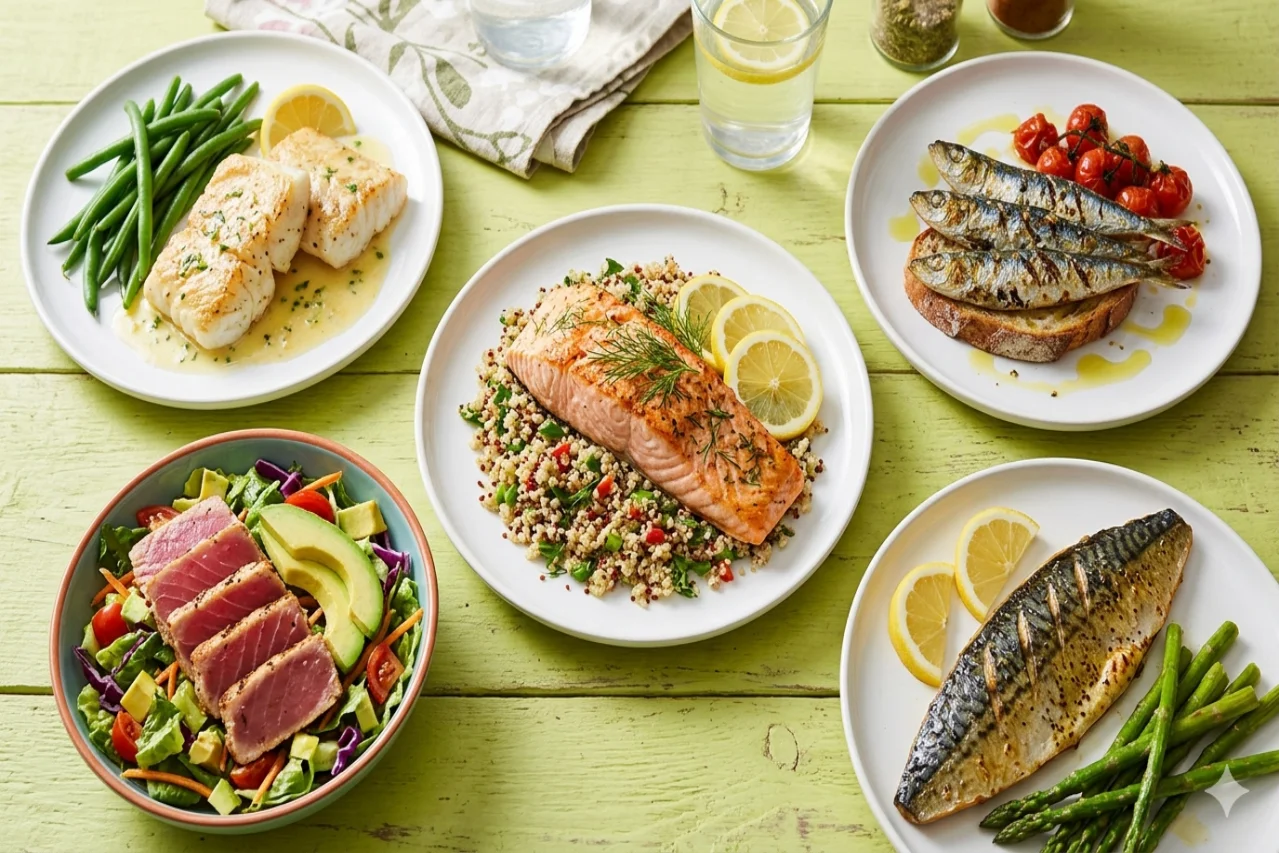
What if the secret to a faster metabolism and leaner physique was already in the seafood aisle? Omega-3 fatty acids — found abundantly in fatty fish — are among the most researched nutrients in sports nutrition and metabolic health. From activating fat-burning genes to reducing cortisol-driven belly fat and accelerating muscle protein synthesis, the right fish on your plate can transform your body composition more powerfully than most supplements. Here are the top 5 fish you need to know about — ranked by omega-3 density, protein quality, and practical everyday use.
Why It Matters
How Do Omega-3s Actually Support Weight Loss and Lean Muscle?
Omega-3 fatty acids — specifically EPA (eicosapentaenoic acid) and DHA (docosahexaenoic acid) — do far more than support heart health. For anyone pursuing a lean, high-performance physique, these fats operate at the cellular level to shift your body into a fat-burning, muscle-building state.
The Science
3 ways omega-3s accelerate your results
01. Activate fat-burning genes
EPA and DHA switch on PPAR-alpha receptors—nuclear proteins that literally instruct your cells to oxidize stored fat for fuel instead of storing it.
02. Boost muscle protein synthesis
Omega-3s enhance the anabolic response to protein intake by sensitizing muscle cells to insulin and amino acids, meaning more gains from the same protein dose.
03. Lower cortisol & inflammation
Chronic inflammation suppresses metabolism and elevates cortisol — the primary driver of visceral (belly) fat accumulation. Omega-3s are among nature’s most potent anti-inflammatories.
The Rankings
Top 5 Best Fish for Omega-3s, Lean Gains & High Metabolism
Omega-3 Champion
1. Atlantic Salmon — The Ultimate Lean Muscle Fish
| 2,260 mg Omega-3 per 100g | 25g Protein per 100g | 208 Calories per 100g | A+ Nutrient rating |

Salmon is the undisputed king of high-metabolism eating. It delivers the highest combined EPA+DHA content of any commonly available fish, alongside a full spectrum of B vitamins (particularly B12 and niacin) that are essential for cellular energy production. The protein in salmon is also exceptionally bioavailable — it scores among the highest on the PDCAAS (Protein Digestibility-Corrected Amino Acid Score) scale, meaning your muscles actually absorb and use nearly all of it.
Wild-caught Atlantic or Pacific salmon is superior to farmed for omega-3 density, though both are excellent choices. Aim for 2–3 servings per week to reach the 2–3g daily omega-3 threshold associated with meaningful metabolic improvements in peer-reviewed studies.
🛒Recommended on Amazon: Wild Planet Wild Sockeye Salmon (canned, BPA-free) — wild-caught, no added salt, and delivers 1,400mg of omega-3s per serving at a fraction of fresh salmon’s cost. Also consider Vital Choice Wild Alaskan Salmon (freeze-dried pouches) for a shelf-stable, travel-ready option.
Metabolic Booster
2. Mackerel — The Underrated Fat-Burning Powerhouse
| 2,670 mg Omega-3 per 100g | 19g Protein per 100g | 205 Calories per 100g | A+ Nutrient rating |

Gram for gram, mackerel actually edges out salmon in raw omega-3 content—yet it costs significantly less and remains one of the most underutilized fish in the fitness community. Atlantic mackerel is particularly rich in CoQ10, a mitochondrial coenzyme that enhances cellular energy efficiency and has been associated with improved exercise endurance and faster recovery times.
Mackerel is also one of the richest dietary sources of selenium—a trace mineral critical for thyroid hormone conversion. Since thyroid hormones are the master regulators of your basal metabolic rate, adequate selenium intake is directly tied to how fast your body burns calories at rest.
🛒Recommended on Amazon: King Oscar Mackerel in Olive Oil — MSC-certified, wild-caught Atlantic mackerel with 2,100mg omega-3 per can. An ideal high-protein, high-fat meal-prep staple under $3 per serving.
Lean Protein Elite
3. Sardines — The Tiny Fish With Massive Anabolic Potential
| 1,480mg Omega-3 per 100g | 25g Protein per 100g | 185 Calories per 100g | A Nutrient rating |

Sardines are one of the most complete whole foods on the planet for body composition. Unlike larger fish, sardines are typically eaten whole — bones included — making them one of the rare non-dairy foods that deliver a significant dose of calcium alongside protein and omega-3s. Calcium has a synergistic relationship with fat metabolism: adequate calcium intake is associated with lower body fat independent of total caloric intake, through a mechanism involving calcitriol suppression.
Sardines are also among the lowest in mercury of any omega-3-rich fish, making them ideal for daily consumption without the heavy metal concerns associated with larger predatory fish like tuna or swordfish.
🛒Recommended on Amazon: Wild Planet Wild Sardines in Extra Virgin Olive Oil — the top-rated sardine on Amazon, sustainably caught, with skin and bones intact for maximum nutrient density. A 12-pack variety is perfect for weekly meal prep.
High-Protein, Low-Cal
4. Albacore Tuna – The Gym-Goer’s Everyday Staple
| 1,000 mg Omega-3 per 100g | 30g Protein per 100g | 132 Calories per 100g | A- Nutrient rating |

Albacore tuna (also called “white tuna”) offers the highest protein-to-calorie ratio of any fish on this list, making it the go-to choice for athletes and body-composition-focused individuals in a caloric deficit. A single can delivers 30–35g of complete protein—comparable to a full chicken breast—while staying under 150 calories.
While albacore’s omega-3 content is lower than salmon or mackerel, it more than compensates with its extraordinary protein density and its niacin content. Niacin (vitamin B3) is a direct precursor to NAD⁺, the coenzyme that powers mitochondrial fat oxidation. Higher NAD+ levels are associated with faster metabolic rates and improved endurance in both human and animal studies. One important note: limit it to 2–3 servings per week due to moderate mercury levels, and opt for pole-and-line-caught albacore for sustainability.
🛒Recommended on Amazon: Safe Catch Elite Wild Tuna — the only tuna brand that tests every single fish for mercury, making it the gold standard for frequent consumers. Also consider American Tuna Pole & Line Wild Albacore for the cleanest sourcing on the market.
Anti-Inflammatory
5. Rainbow Trout — The Clean Bulker’s Secret Weapon
| 980mg Omega-3 per 100g | 20g Protein per 100g | 150 Calories per 100g | A Nutrient rating |

Rainbow trout is the underdog of this list—and arguably the most versatile for daily high-protein cooking. It’s mild in flavor, cooks in under 10 minutes, and is among the most sustainable, low-mercury freshwater fish available in North America. Farmed rainbow trout is rated “Best Choice” by the Monterey Bay Aquarium Seafood Watch.
Trout is exceptionally rich in phosphorus and potassium — two minerals that are frequently depleted by intense training. Phosphorus is critical for ATP resynthesis (your muscle’s immediate energy currency), while potassium regulates muscle contractions and helps prevent cramping during high-intensity workouts. For athletes doing strength training 4–5 days per week, trout makes an excellent post-workout meal anchor alongside complex carbohydrates.
🛒 Recommended on Amazon: Vital Choice Wild Rainbow Trout Fillets (frozen) — individually vacuum-sealed, sustainably sourced. Pair with a COSORI Air Fryer (5.8 Qt) for a 12-minute high-protein trout dinner with zero oil needed.
Side-by-side omega-3 & protein comparison
| Fish | Omega-3 / 100g | Protein / 100g | Calories / 100g | Best for |
| Atlantic Salmon #1 | 2,260mg | 25g | 208 | All-round performance |
| Mackerel | 2,670mg | 19g | 205 | Max omega-3 on a budget |
| Sardines | 1,480mg | 25g | 185 | Daily use, bone health |
| Albacore Tuna | 1,000mg | 30g | 132 | Cutting / caloric deficit |
| Rainbow Trout | 980mg | 20g | 150 | Post-workout recovery |
Frequently asked questions about omega-3s, fish, and metabolism
Does eating fish actually help you burn more fat, or is that a myth?
It’s not a myth — it’s one of the better-supported mechanisms in nutrition science. EPA and DHA from fish activate PPAR-alpha nuclear receptors, which regulate the transcription of genes involved in beta-oxidation (fat burning). Multiple randomized controlled trials have shown that supplementing with fish-derived omega-3s while maintaining a caloric deficit leads to greater reductions in body fat percentage — particularly visceral (abdominal) fat — compared to caloric restriction alone. However, fish aren’t magic: they work best as part of a structured diet with a caloric deficit and regular exercise. Think of them as a metabolic amplifier, not a replacement for the fundamentals.
How much fish should I eat per week for weight loss and muscle gain?
Most sports nutrition guidelines and the American Heart Association recommend at least 2–3 servings of fatty fish per week, providing roughly 2–3g of combined EPA+DHA. For active individuals pursuing body recomposition (simultaneous fat loss and muscle gain), research suggests the upper end of that range — closer to 3g of omega-3s daily — produces more pronounced anabolic and lipolytic effects. In practical terms, this means a 150g serving of salmon or mackerel 3–4 times per week will cover your requirements. Supplementing with a high-quality fish oil capsule on non-fish days can fill the gap without adding extra calories.
Is it better to eat whole fish or take fish oil supplements for fat loss?
Whole fish is preferable when possible, for several reasons. Real fish delivers omega-3s in a food matrix alongside synergistic nutrients — protein, selenium, B12, iodine, and astaxanthin (in salmon and trout) — that supplements cannot replicate. The bioavailability of omega-3s from fish is also higher than from most capsule forms, particularly when consumed with dietary fat. That said, high-quality fish oil supplements are a practical and effective alternative for days when eating fish isn’t feasible. Look for supplements with at least 1,000mg combined EPA+DHA per serving, in triglyceride (not ethyl ester) form, with third-party testing (IFOS certification) for purity and heavy metals.
What is the best fish to eat for building lean muscle without gaining fat?
Albacore tuna and Atlantic salmon are the top two choices for lean muscle building. Tuna wins on protein density (up to 30g per 100g) with minimal fat — ideal during a cutting phase or caloric deficit. Salmon wins on the anabolic omega-3 front: its EPA+DHA content enhances muscle protein synthesis, meaning your muscles respond more aggressively to the protein you eat, regardless of source. The most effective strategy is to combine both — use tuna as your everyday high-protein base and add salmon 2–3 times per week to maximize the muscle-building signal from your total protein intake.
Are canned fish as nutritious as fresh for omega-3s and protein?
Yes — for the most part. Multiple studies have confirmed that the canning process does not significantly degrade omega-3 fatty acid content in salmon, sardines, or mackerel, since the fish are cooked inside sealed cans rather than exposed to prolonged heat or oxidation. Protein content is virtually identical between fresh and canned. The practical advantages of high-quality canned fish — shelf stability, affordability, and convenience — make them an excellent everyday choice. The key distinctions to look for: choose varieties packed in water or olive oil (not refined vegetable oils), opt for BPA-free cans, and prioritize brands that disclose sourcing and testing practices, such as Wild Planet and Safe Catch.


